



Changing vehicle fleets: Why 35% of companies are continuing to expand their vehicle fleets.
The vehicle fleet is a central part of many companies. It enables the mobility of employees, the transportation of goods and thus ensures the smooth running of many operational processes. For this reason alone, the correct management of the fleet is an important task.
In order to meet the various requirements, it is important to consider the latest trends and technologies in fleet management. The use of digital solutions, such as fleet software and telematics systems, can help to increase efficiency and optimize costs.
In this article, you can find out what types of fleets there are, what challenges and tasks await you in the fleet and what the fleet of the future will look like.
Contents
What is a Vehicle Fleet?
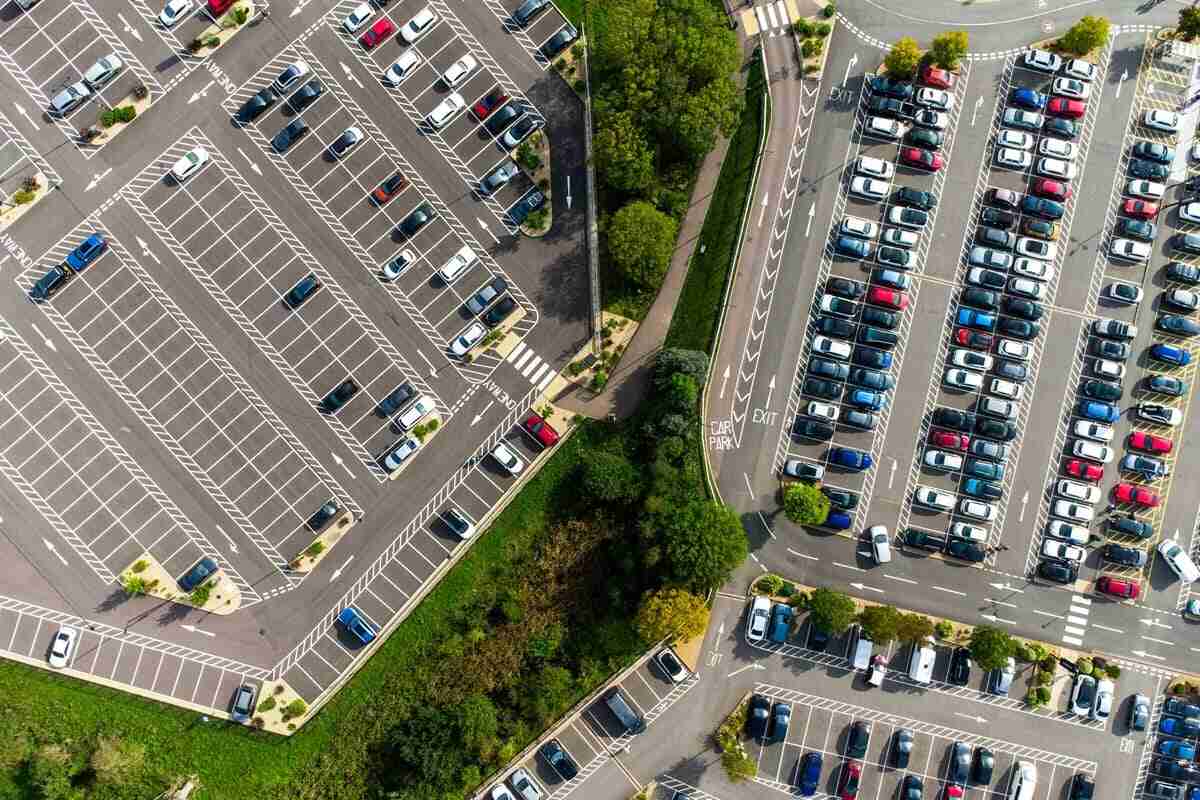
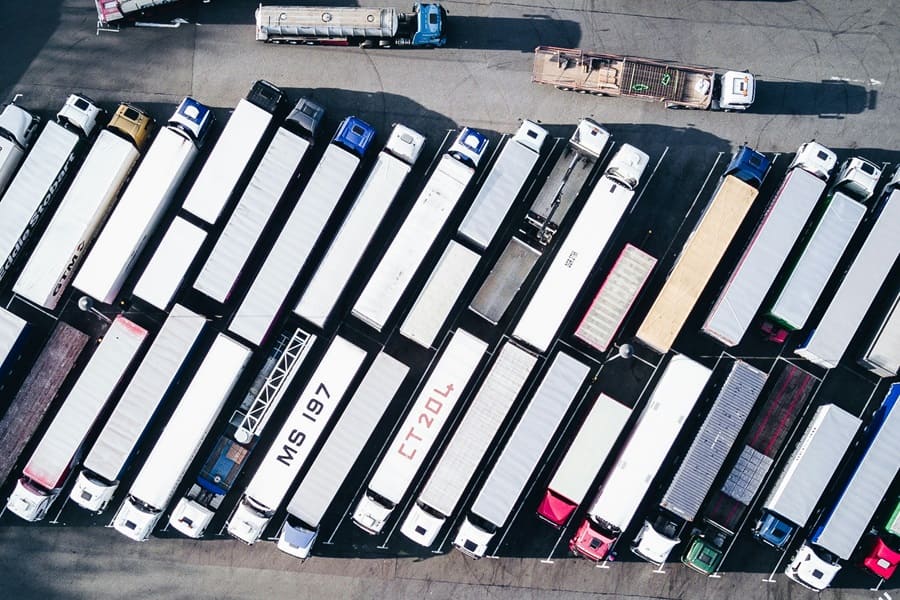
The vehicle fleet, also known as the fleet, includes all of a company’s vehicles. In order to meet operational requirements, the fleet consists of different vehicles depending on the industry. The vehicle fleet can include company cars as well as pool vehicles, commercial vehicles, trucks or other special vehicles. They are used to transport goods or provide services. Even company bicycles can be part of the fleet.
Fleet grows - and with it the complexity
In many companies, the vehicle fleet is not just evolving – it is actively growing. According to a recent study, 35% of fleets are planning to further expand their vehicle fleet.
(Source: Dataforce, 2024)
What sounds like growth at first brings new challenges in practice. More vehicles mean more data, more coordination effort and greater complexity in administration.
This also changes the role of fleet management: it is no longer just a matter of organizing existing processes, but of creating structures that remain scalable – even as the fleet grows.
Why is the Vehicle Fleet so Important?
Depending on the orientation of the company, the vehicle fleet can play a central role in the fulfillment of operational tasks. The vehicle fleet is important for many processes in a company.
Ensure Operational Processes
Companies that rely on the transportation of goods and people need safe, operational and serviceable vehicles. It is important to ensure smooth processes and punctual deliveries in order to maintain customer satisfaction. A well-organized and efficient fleet management system can ensure that companies use vehicles efficiently and meet the needs of their customers.
Employee Mobility
Many companies use vehicles for business trips to customers or suppliers. Here, the vehicle fleet enables flexible mobility for employees. Efficient fleet management allows vehicles to be made available in the best possible way. In addition, a well-maintained fleet is important for a company’s image and can create trust with customers and business partners.
Company Car as a Benefit
For many employees, a company car continues to be a popular incentive. In order to motivate employees open_in_new and at the same time take advantage of tax benefits, so-called motivational leasing is common. This is a company car lease that is offered in the form of salary conversion as part of the salary package. Companies benefit from tax advantages and increased employee loyalty.
Digitize your fleet for just €2.90 per vehicle per month
Fleet tasks: Fleet management activities
The practical implementation of fleet management covers various areas of responsibility. The coordination of the vehicle fleet requires careful organization and the relevant fleet tasks can be very diverse. The aim is to ensure the efficient and safe use of the vehicles in the fleet and to achieve operational goals. Here is an overview of the most important challenges and tasks in the vehicle fleet:
Data Acquisition and Processing
Reports and data analysis can help to monitor vehicles and make efficient decisions for the fleet. The evaluation of data such as mileage, fuel consumption, maintenance requirements and driving behavior can identify potential cost savings.
Service and Maintenance
The safety of the drivers is the top priority. Regular maintenance and inspections of the vehicles guarantee their operational readiness and safety. This also minimizes downtime. Good vehicle management is important to keep an eye on maintenance schedules and keep costs under control. Fleet managers should also ensure that all legal requirements are met. In this way, they can avoid risks and increase safety in the fleet.
Cost Control
Among other things, fleet costs can be the company’s biggest cost drivers. Fleet managers must therefore regularly monitor the operating costs for fuel, maintenance, repairs and insurance, for example. In this way, the budget can be kept in view and better protected against price fluctuations.
Another important role is played by vehicle depreciation in order to effectively manage fleet costs and take advantage of tax benefits. By planning a targeted depreciation strategy, companies can better manage their financial resources and save costs in the long term.
Vehicle Procurement
In order to complement the fleet appropriately, fleet managers should consider operational requirements when procuring additional vehicles. Think specifically about the company’s budget and environmental goals. Company car leasing is a particularly popular form of financing.
Efficient Vehicle Management
Effective vehicle management is the backbone of a well-functioning fleet. It includes not only the management of vehicles, but also the continuous analysis of vehicle data. Fleet managers should regularly monitor fuel consumption and other operational metrics to identify and implement efficiency improvements. In addition, modern fleet management systems are essential to ensure seamless integration of data and processes.
Compliance with Legal Regulations
The vehicle fleet is subject to a large number of legal regulations. On the one hand, this is based on the Occupational Health and Safety Act (ArbSchG), which regulates measures for the health and safety of employees. The Road Traffic Licensing Regulations (StVZO) contain requirements for vehicle equipment, exhaust emission values and safety tests. The German Social Accident Insurance (DGUV) issues accident prevention regulations, or UVV for short, which regulate driver safety and the inspection of vehicles.
Claims Settlement
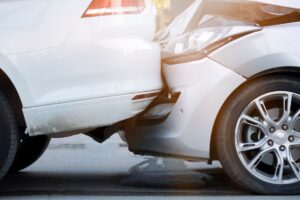
Quick action is required to process a claim properly. Communication with garages and insurance companies as well as the provision of replacement vehicles is also part of claims handling and is one of the tasks of the vehicle fleet.
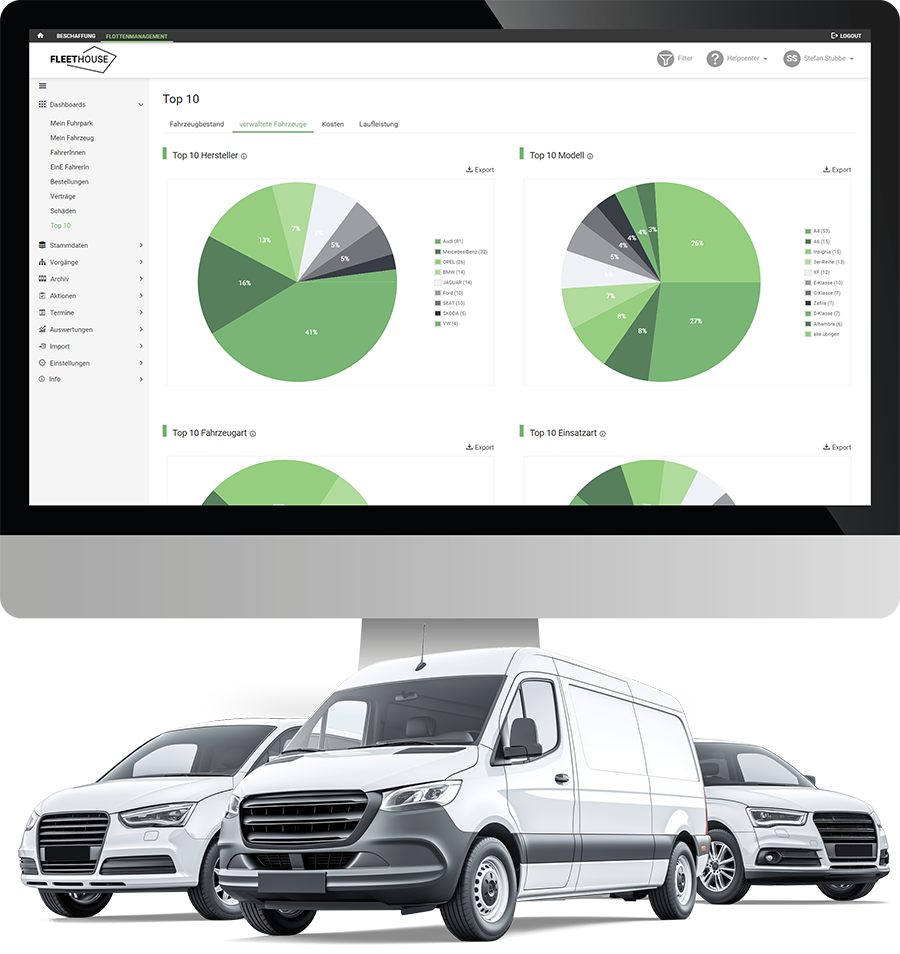
The software for your fleet
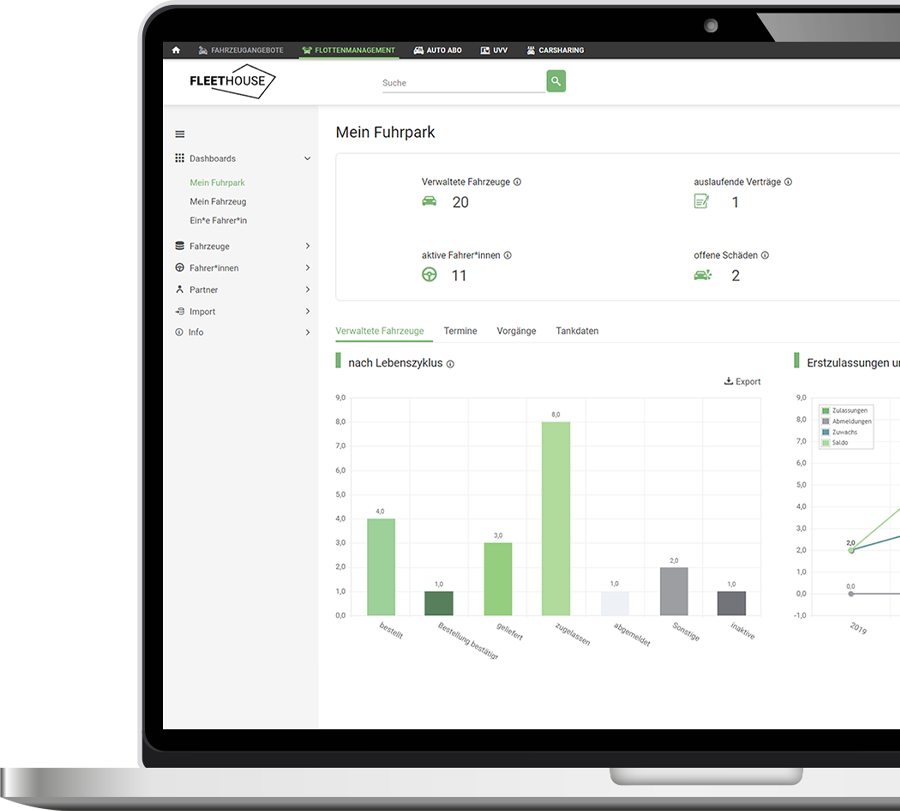
With Fleethouse, you can manage all fleet tasks digitally. Keep an eye on appointments, maintain data centrally and save valuable time.
Why growth in the vehicle fleet requires new structures
A growing fleet presents companies with different challenges than a stable fleet. Processes that still work with just a few vehicles quickly reach their limits as soon as additional locations or users are added.
Typical developments:
- Increasing administrative costs
- More coordination between departments
- Higher requirements for transparency and data quality
This is precisely why it is becoming increasingly important not only to manage the vehicle fleet, but also to actively control it. Companies that rely on clear processes and digital solutions such as Fleethouse at an early stage can scale their fleet much more efficiently.
Which legal regulations must be complied with in the vehicle fleet?
Fleet managers need to keep an eye on a number of regulations and requirements when it comes to managing a fleet. Owner liability plays a particularly important role here. This gives rise to important obligations:
- Driving license check: As a fleet manager, you must regularly check the driving licenses of all drivers. It does not matter whether the employees use a company vehicle regularly or only occasionally, or whether it is a company car or a pool vehicle. It is recommended that driving licenses are checked every six months.
- UVV driver training: Company vehicles are work equipment, so drivers must be trained at least once a year in how to use them safely. Behavior in the event of accidents is also part of such driver training in accordance with UVV.
- UVV vehicle inspection: An expert inspects the roadworthiness and operational safety of company vehicles. Safety-relevant aspects such as brakes, lighting equipment, tires and steering are examined. The inspection must be carried out at least once a year.
How can fleet costs be reduced?
The vehicle fleet can be one of the largest cost centers in the company. Efficient management can save costs and resources in the vehicle fleet:
- Monitor fuel consumption and motivate drivers to drive economically or opt for more fuel-efficient vehicles
- Identify underutilized or very underutilized vehicles and possibly get rid of them to reduce fixed costs
- Compare and negotiate contracts with insurance and leasing providers to get the best conditions
- With fleet software, you can minimize administrative effort and identify potential savings
In our article on the topic of cost drivers in the fleet, we give you tips on how you can reduce fleet costs. For savings on fuel co., we recommend our article 7 tips on how to reduce fuel costs.

Strategic fleet management instead of just cutting costs
Many companies initially focus on reducing individual cost items within their fleets. In practice, however, it has become clear that long-term savings are possible above all when the fleet is viewed holistically.
A modern vehicle fleet is more than just a collection of vehicles. It is a complex system of usage, costs, availability and organizational processes. This is precisely the difference between pure administration and strategic fleet management.
Instead of just reacting to individual cost factors, the aim is to recognize correlations:
- Which vehicles are permanently underutilized?
- Where do unnecessary downtimes occur?
- Which usage patterns drive costs in the vehicle fleet?
It is only through this perspective that real optimization potential can be identified. Companies can adapt their vehicle fleet in a targeted manner, simplify processes and work more efficiently in the long term.
Digital solutions like Fleethouse address this very issue. By centrally consolidating all vehicle, usage, and cost data, they provide—for the first time—a clear foundation for informed decisions in fleet management. Instead of merely reacting to developments, companies can actively manage their fleets and optimize them over the long term.
How can the vehicle fleet be digitized?
Digital tools help to increase efficiency and safety in the fleet and simplify administration. It is important to choose the right digital solution to best meet the needs of the fleet.
Fleet software such as Fleethouse helps you to organize vehicles and process data centrally. Targeted evaluations show at a glance which vehicles cause which costs. This allows you to quickly find out where savings can be made in your fleet. Digital solutions also support compliance with official regulations by automatically monitoring deadlines and necessary documentation.
Software also makes it easier to comply with legal regulations. This allows you to keep an eye on important deadlines and can, for example, significantly minimize costs by providing driver training via e-learning.
Webinar: Checklist for Fleet Management
In our free webinar, you will receive valuable tips on what to look out for when managing a vehicle fleet – from owner liability to the right form of financing.
Car sharing: Sharing vehicles in the fleet
Pool vehicles are a modern concept for the vehicle fleet. They are a practical solution for companies that want to respond flexibly to the mobility needs of their employees. With this concept, a pool of different vehicles is available for employees in the vehicle fleet. They can select the right vehicle according to their needs.
Advantages of Car Sharing in the Fleet
By sharing several vehicles, a company requires fewer vehicles overall. Downtimes are minimized as several employees can use a vehicle at different times. This saves resources and at the same time offers employees flexibility in their choice of vehicle. The reduced need for vehicles also means that fewer parking spaces are required. Car sharing also helps to reduce costs, as fewer vehicles mean less maintenance and lower insurance premiums. The increased use of vehicles also leads to better efficiency and can help to reduce the company’s environmental footprint.
Organization of Pool Vehicles
A structured organization is necessary to ensure smooth processes in the operation of pool vehicles. Clear guidelines must be defined in the form of a pool vehicle agreement for the use and return of the vehicles. It is also important to comply with legal regulations such as owner liability in the vehicle fleet and to check driving licenses, for example.
Car sharing software can be helpful here and support the management of vehicles. It assigns the right vehicle for each trip, taking into account the number of kilometers leased and the charging status of electric vehicles. It also informs you in the event of delays, changes to bookings or cancelations.
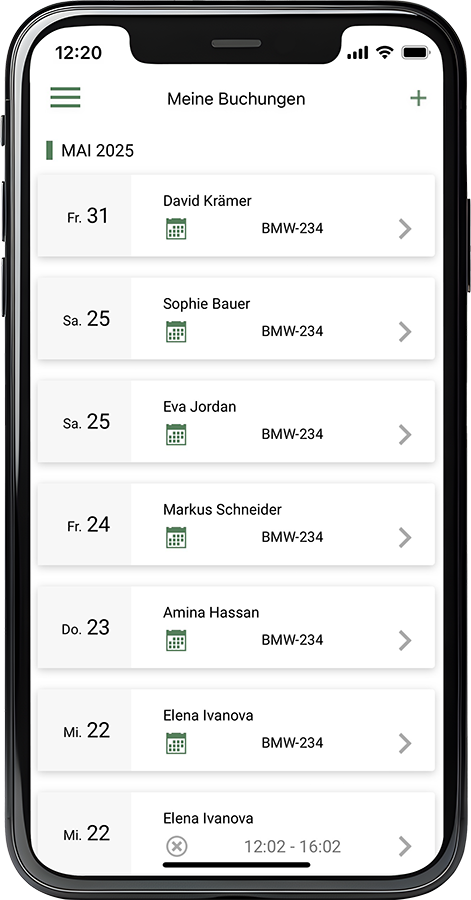
Complete Package for your Car Sharing
From booking to return, organize your pool vehicles with Fleethouse.
How important is a fleet insurance?
Specialized fleet insurance offers tailor-made insurance cover for company vehicles. They often cover a broader spectrum of damage and risks and can help to optimally insure the vehicle fleet. There are also supplementary insurance policies that can be helpful in protecting other areas of the fleet. These include, for example, passenger accident insurance or special cargo insurance. It is important that you choose a fleet insurance policy that suits the needs of your fleet.
When a vehicle fleet becomes a challenge
Many companies only realize late on that their vehicle fleet has become more complex. Common signs of this are
- Lack of overview of vehicles and costs
- High manual effort in administration
- Unclear responsibilities in fleet management
At this point at the latest, the use of digital systems such as Fleethouse pays off. They help to structure processes and make the fleet controllable again.
What are the trends in the vehicle fleet?
The future of fleet management will be strongly influenced by technological innovations. Telematics systems and artificial intelligence will enable fleet managers to monitor and control their fleets more precisely. Trends such as the integration of electromobility and car-sharing concepts offer new opportunities for the use of resources, while at the same time focusing on effective vehicle management and cost control.
In addition to new technologies, there are various other requirements that will determine the future of the vehicle fleet and shape the role of fleet managers.
Climate and Environmental Goals for the Fleet
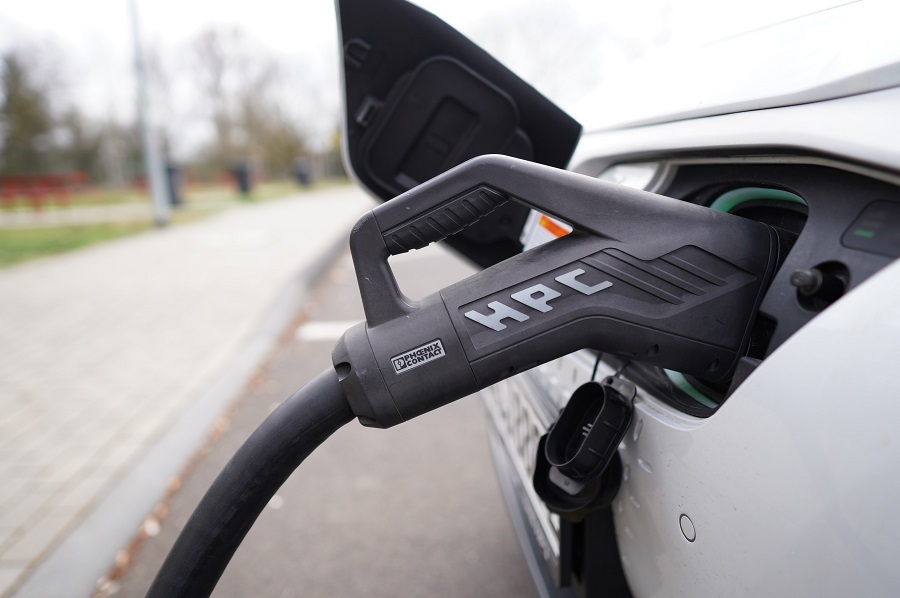
Environmental and climate goals are also becoming increasingly important in the vehicle fleet. Companies are increasingly focusing on how to address CO₂ emissions and resource consumption. As a result, topics such as e-mobility and alternative powertrains are coming more into focus.
Flexible usage models and corporate carsharing can help maximize the utilization of existing vehicles and reduce the demand for new ones. In addition, companies can analyze fuel consumption data and raise drivers’ awareness of efficient driving practices. This allows them to align economic requirements with specific climate and environmental goals for their vehicle fleets.
Mobility Management instead of Vehicle Management
Employees’ mobility requirements are also constantly changing. Flexibility and individuality are becoming increasingly important. As a result, the role of the fleet manager is also changing. The focus of fleet management is no longer just the coordination and organization of company vehicles, but rather the management of overall company mobility. Fleet managers are increasingly taking on the role of mobility managers. New concepts such as car sharing or the mobility budget complement the classic company vehicle.
FAQ - Vehicle Fleet
A vehicle fleet consists of all the vehicles that a company or organization uses for business purposes.
A vehicle fleet can be divided into various categories, including passenger cars, commercial vehicles such as trucks and vans, and specialty vehicles for specific applications. Each vehicle fulfills important functions, ranging from ensuring the smooth transport of goods to providing employees with mobility for business trips.
In light of increasing climate and environmental requirements, companies are increasingly exploring the use of electric or hybrid vehicles and other alternative powertrains in their fleets.
The aim of a vehicle fleet is to meet the mobility and transportation needs of the company. Be it for the transportation of goods, passenger transport or for use in specific areas of responsibility such as maintaining municipal structures. The vehicle fleet also plays a decisive role in optimizing operational processes. It not only enables efficient supply chains and on-time transportation, but also supports the flexibility of employees through business trips to customers or meetings. A well-organized fleet can also strengthen the company’s image by signaling reliability and professionalism to the outside world.
As a rule, responsibility for the vehicle fleet lies with the management. However, the operational tasks in fleet management are usually delegated to a fleet manager or fleet manager. This person coordinates the vehicles, monitors costs and ensures compliance with legal requirements.
Fleet software helps to centrally control all processes in the fleet – from vehicle data to deadlines and costs. This makes management significantly more efficient and transparent. Solutions such as Fleethouse make it possible to digitally map the entire vehicle fleet and make well-founded decisions based on up-to-date data.
Structured fleet management ensures that vehicles are used optimally, costs are controlled and processes are organized efficiently. Without clear processes, unnecessary expenditure and organizational problems quickly arise, which have a direct impact on profitability.
A well-managed fleet is crucial for the smooth operation of a company that relies on vehicles. Efficient management can reduce costs and increase productivity. Compliance with legal regulations also plays an important role. Careful organization ensures that all necessary documents and inspections are up to date and driver safety is guaranteed.
A clear definition of the vehicle fleet creates transparency about which vehicles belong to the company and how they are used. This is crucial for administration, cost control and compliance with legal requirements. At the same time, it forms the basis for structured and efficient fleet management.
Arrange an online consultation appointment
Arrange your personal consultation appointment now. You can easily select a suitable appointment using our booking tool.
The most Important Facts about the Vehicle Fleet
All of a company's vehicles are grouped together in the fleet. From cars to trucks, special vehicles and even bicycles - a wide variety of vehicle types are represented.
The vehicle fleet can be one of a company's biggest cost drivers. Efficient management is important here in order to reduce costs.
In the future, new technologies and software solutions in particular can help to manage the fleet efficiently.
Further Fleet Knowledge
If you liked this article and would like to know more about this topic, we recommend these articles.

Vehicle management: importance in the fleet and helpful tips

Basic areas of fleet management
Helpful Articles on the Subject of Vehicle Fleets
Fleet Manager: Tasks, Qualifications and Salary
Workshop Checklist: How to find the Best Workshop for your Fleet
Key Figures in the Fleet: the 5 Decisive Success Factors
Cost Drivers in the Vehicle Fleet: How you can Reduce your Costs
Owner liability in the fleet: what fleet managers should bear in mind
Fleet insurance for your vehicle fleet: this is what matters
Fleet management: how to manage your fleet efficiently
Build up a vehicle fleet: How companies get off to an efficient and cost-saving start
Duties in the Fleet: UVV Instruction for Drivers
Claims management: 1×1 for fleet managers
Taxing company cars: requirements and tax advantages
Leasing return in the event of damage: tips for fleet managers
The company car: advantages, challenges and future prospects
Fuel cards for companies: Advantages, functions and tips for use
Fleet management: basics and helpful tips
Fleet management without Excel: How to save time and money
Fleet manager training: Qualified for modern fleet management
Driving license check via app: digital, safe and efficient
E-mobility in the fleet: tips for integrating e-vehicles
Driver’s license check for employers: sample & digital solution
Electrify your vehicle fleet: How to make the switch to electromobility a success