



Vehicle management plays a crucial role for companies with their own vehicle fleet. It encompasses all tasks relating to the organization, maintenance and monitoring of vehicles in the company and aims to make mobility efficient and cost-effective. In this article, you will find out why vehicle management is important and what advantages fleet management software can offer.
Contents
What does vehicle management mean in the fleet?
Vehicle management in the Fleet management encompasses all processes related to the organization, monitoring, and maintenance of vehicles within a company. This includes tasks such as documenting vehicle data, monitoring the condition of company cars, scheduling repairs, tracking mileage, and managing insurance and contracts. In addition, the effective organization of the vehicle fleet is an important component of fleet management. The goal of fleet management is to to make all processes in the fleet efficient, safe and cost-effective and thus ensure smooth operations.
Why is efficient vehicle management important?
A company’s vehicle fleet can be one of its largest cost drivers. Not only do the upfront costs of purchasing vehicles strain the budget, but the costs of maintenance, repairs, fuel, administration, and insurance must also be taken into account. Efficient fleet management can help reduce costs, better organize operations, and support environmental goals within the fleet. Fleet management software provides a centralized database for this purpose and simplifies the management of relevant processes.
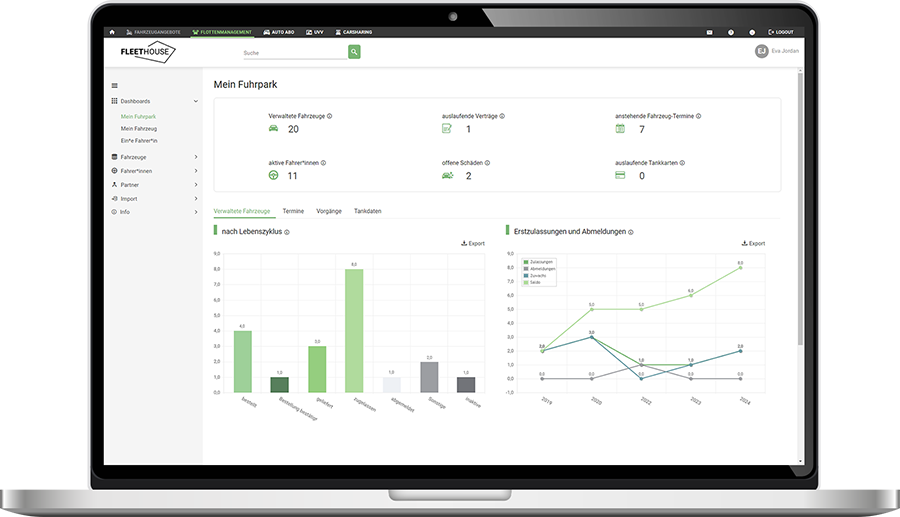
Fleet management software enables the central recording of all necessary data in vehicle management. In addition to important deadlines such as the general inspection or AU, the fleet software also displays leasing contracts that are due to end soon, deviating mileages and open damage reports. This allows companies to maintain an overview and react quickly to unforeseen events.
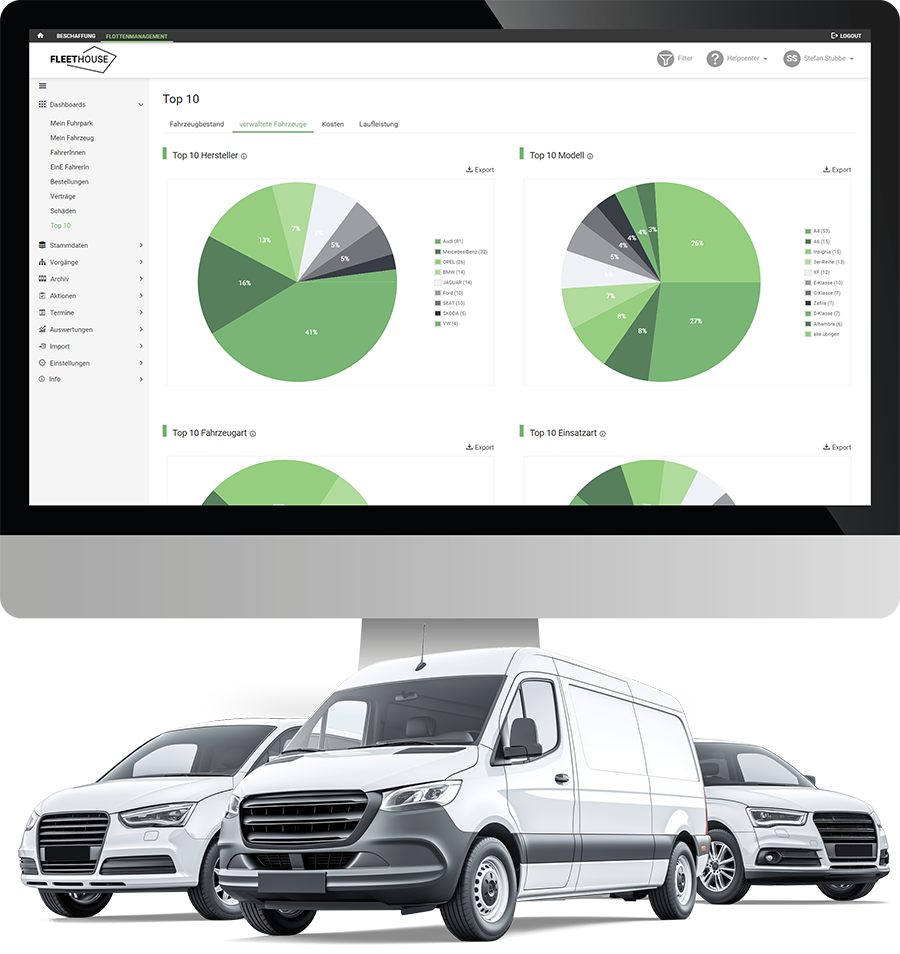
Vehicle management for only € 2.90 per vehicle per month
Fleethouse gives you clear dashboards and an all-round view of your fleet
What are the advantages of efficient vehicle management?
The organization of a vehicle fleet is complex. Evaluations available at the touch of a button help with strategic decisions, and processes must be simple and clearly regulated in order to master the diverse requirements of day-to-day business. We will show you how specialized software can support you in this:
- Cost control and transparency: efficient vehicle management makes it possible to keep an eye on all costs. Fleet management software solutions provide a detailed overview of expenditure and thus help to identify potential savings, avoid unnecessary costs and plan budgets better.
- Optimization of vehicle use: Comprehensive management allows the existing vehicle fleet to be used optimally, as this reduces empty runs and routes can be planned better. This can also increase the capacity utilization per vehicle. This means that fewer vehicles have to be purchased and therefore considerable costs can be saved. The software also provides reliable services when it comes to adhering to agreed mileages for leased vehicles.
- Meeting legal and safety requirements: Compliance with legal requirements, such as meeting keeper liability, is an important part of fleet management. Digital solutions help to meet deadlines and avoid fines. Regular vehicle inspections also increase operational safety.
- Keeping track of fuel consumption and CO₂ emissions: Fleet management software can help identify vehicles with unusually high fuel consumption and pinpoint opportunities for savings. Fuel consumption data can also serve as a basis for raising awareness among vehicle users about more efficient driving habits. Key vehicle data can also support the planning of charging infrastructure and the use of electric vehicles, thereby contributing to the achievement of a company’s internal environmental goals.

What are the challenges of fleet management?
Managing vehicles presents companies with a number of challenges to ensure their mobility. Here are some tasks you should consider in vehicle management:
- Coordination and planning: The efficient coordination of vehicles is often complex. Fleet managers have to plan routes optimally in order to be able to use each vehicle productively. In companies with several locations, this quickly becomes a logistical challenge.
- Data management and transparency: A vehicle fleet generates a large amount of data, such as consumption values, logbook entries or maintenance logs. This information must be collected, analyzed and made accessible centrally. Without suitable tools, it is difficult to ensure an overview of the entire fleet and to track all important key figures in the fleet.
- Driver safety and owner liability: The safety of drivers and compliance with regulations is a central concern of vehicle management. Various deadlines must therefore be met in the fleet in the areas of owner liability and driver’s license checks. Keeping track of this can be a major challenge for fleet managers.
- Unforeseen events: Breakdowns, accidents or short-term changes in demand can have a major impact on planning. Flexibility and the ability to react quickly are required here in order to maintain operations and ensure mobility within the company.
Why is vehicle management with Excel not optimal?
At first glance, vehicle management with Excel may appear to be a cost-effective and simple solution, especially for smaller companies. However, a closer look reveals significant disadvantages that make this method inflexible and error-prone. In Excel, almost all processes have to be carried out manually, be it updating maintenance dates, calculating total costs or generating reports. This is not only time-consuming, but also carries the risk of missing important deadlines. Vehicle management with Excel may be a short-term solution, but it is neither efficient nor reliable in the long term.
Do you want to give Excel the boot?
Manage your fleet digitally for just €2.90 a month per vehicle.
Tips for efficient vehicle management: software as a fleet solution
In order to manage vehicles efficiently, the use of fleet management software is also suitable for smaller fleets. It offers automated processes and integrations to optimize the vehicle fleet. Companies that rely on such solutions benefit from greater efficiency and higher data security.
With fleet software, you can keep track of all relevant contract data and mileage of your vehicles at all times. This transparency ensures that important information is not overlooked. In this way, you avoid unexpected costs, for example by exceeding the leasing mileage, and can take measures to optimize costs at an early stage. Instead of laboriously collecting data manually, the software provides you with helpful analyses and reports. It collects all important information centrally and prepares it clearly. This allows you to make well-founded decisions without wasting time on data preparation.
FAQ - Frequently asked questions about vehicle management
Vehicle management includes the organization of vehicle data such as mileage, insurance and contracts, the planning of maintenance and repairs as well as compliance with legal requirements such as general inspections. Cost control, optimization of vehicle use and sustainability aspects such as the analysis of CO₂ emissions are also important components. The aim is to operate the fleet efficiently, safely and economically.
Even small fleets can benefit greatly from fleet software. If the company reaches its limits with the manual management of vehicle data, maintenance dates and costs, fleet software offers an efficient solution. It helps to store all relevant information centrally, automate tasks and maintain an overview. This not only avoids errors, but also optimizes costs and improves compliance with legal requirements – an investment that quickly pays off, even for smaller fleets.
All relevant vehicle information should be recorded in the vehicle management system, such as vehicle details (make, model, license plate number), mileage, maintenance and repair data as well as insurance policies. Contracts (leasing, purchase), registration data, fuel consumption and CO₂ emissions should also be documented. Driving license checks and vehicle taxes are also important. This data helps to manage the fleet efficiently, optimize costs and comply with legal requirements.
Arrange an online consultation appointment
Arrange your personal consultation appointment now. You can easily select a suitable appointment using our booking tool.

Anne Fuchs

Ciara Lazeta
The most important facts about vehicle management
Efficient vehicle management helps to control costs and make optimum use of the vehicle fleet. With the right software solution, important data can be recorded centrally and processes automated, which saves time and avoids errors.
Excel is often not the right solution for vehicle management, as almost all processes are carried out manually. This carries a high risk of errors.
The digitalization of vehicle management also makes sense for small fleets. It enables a better overview, optimized processes and greater efficiency - which saves both time and money in the long term.
Further Fleet Knowledge
If you liked this article and would like to know more about this topic, we recommend these articles.

Taxing company cars: requirements and tax advantages

The company car: advantages, challenges and future prospects

Further blog articles on the topic of vehicle management
Fleet Manager: Tasks, Qualifications and Salary
Fleet management: basics and helpful tips
Fleet at a Glance: Importance, Trends and Technologies
Fleet management without Excel: How to save time and money
Fleet management: How to manage your vehicles efficiently
Fleet app – how to manage your fleet digitally and efficiently
Fleet management: how to manage your fleet efficiently
Software for fleet management providers: Carano in comparison with Fleethouse
Build up a vehicle fleet: How companies get off to an efficient and cost-saving start