Electrify your vehicle fleet: How to make the switch to electromobility a success
Hans-Joachim Guth
|
The electrification of the vehicle fleet is more than just a trend for many companies. It is an important step towards making mobility more future-proof, economical and sustainable. Those who make the switch at an early stage not only benefit from tax advantages and lower operating costs, but also position themselves as a responsible company.
At the same time, the transition entails new tasks: the right e-vehicles must be selected, charging infrastructure planned and processes adapted. A clear strategy and networked structures are needed for the transition to succeed.
In the following article, we will show you what is important, what the specific benefits are and how you can electrify your fleet step by step.
Contents
Why companies should electrify their vehicle fleet
The demands on modern vehicle fleets are increasing: Energy prices, environmental regulations and the desire for sustainable mobility are changing expectations of company fleets. Those who electrify their vehicles not only invest in climate protection, but also reduce operating costs in the long term and can take advantage of tax benefits.
Whether for delivery services, trade or business trips, an electric fleet is practical and economically viable for many purposes today. Modern electric vehicles have a range suitable for everyday use and good availability.
Electrifying at an early stage means gaining an edge: over competitors, in recruiting and in terms of corporate image.
Electric vehicles in the fleet: advantages and challenges
Electric vehicles can reduce the overall costs of the vehicle fleet and open up new potential for sustainable, future-proof mobility. At the same time, new requirements must be taken into account in everyday life.
Advantages:
Significantly lower operating costs compared to combustion engines
Less maintenance and repairs
Lower CO₂ emissions and a positive sustainability profile
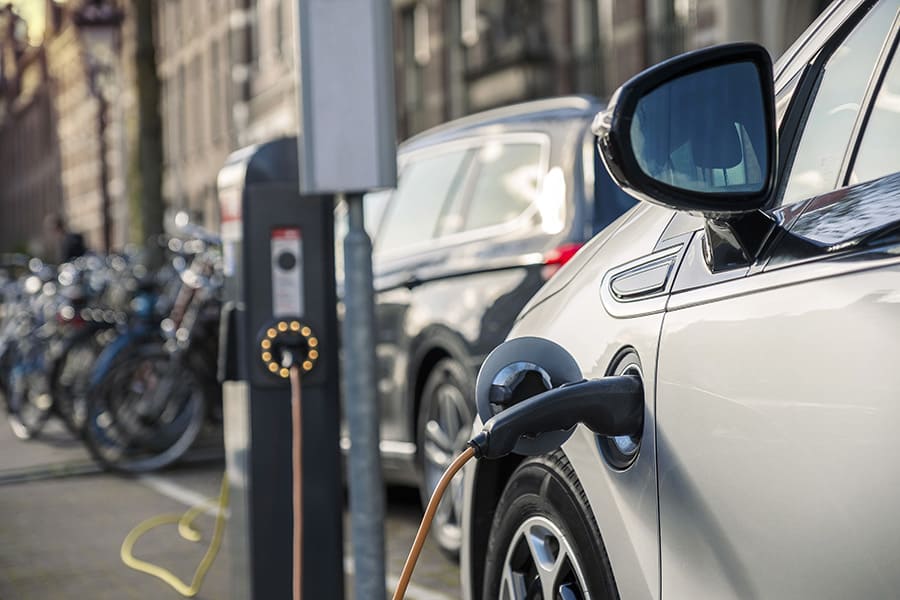
Setting up charging infrastructure: What you need to consider when planning
The right charging infrastructure is the basis for an electrified vehicle fleet. It is about more than just the number of charging points.
Locations: Charging points should be located where the vehicles are regularly parked (e.g. depot, home workplace, customer premises).
Charging capacity: The combination of AC and DC charging stations enables flexible charging times.
Access: Public charging stations can supplement operations, but must be integrated into the processes.
Intelligent control: Load management ensures efficient energy distribution and helps to optimize costs.
Charging cards and billing: Standardized payment solutions simplify use for drivers.
Subsidy programs, tax benefits and the falling cost of charging technology make the investment easier.
Ein elektrifizierter Fuhrpark braucht eine durchdachte Ladeinfrastruktur mit passenden Standorten, ausreichender Leistung und intelligenter Steuerung.
Economy and efficiency in an electrified fleet
An electric fleet scores points in the long term thanks to lower consumption values, lower maintenance costs and better capacity utilization. The total cost of ownership (TCO) is often lower than for combustion engines, even if the initial purchase costs are higher.
Efficient integration into existing fleet processes is crucial. Intelligent charging solutions, digital tools and automated planning help to optimally coordinate charging times and vehicle availability.
An economical, electrified fleet is not only cost-efficient, but also strengthens competitiveness through modern, sustainable mobility.
Transforming the fleet, securing the future
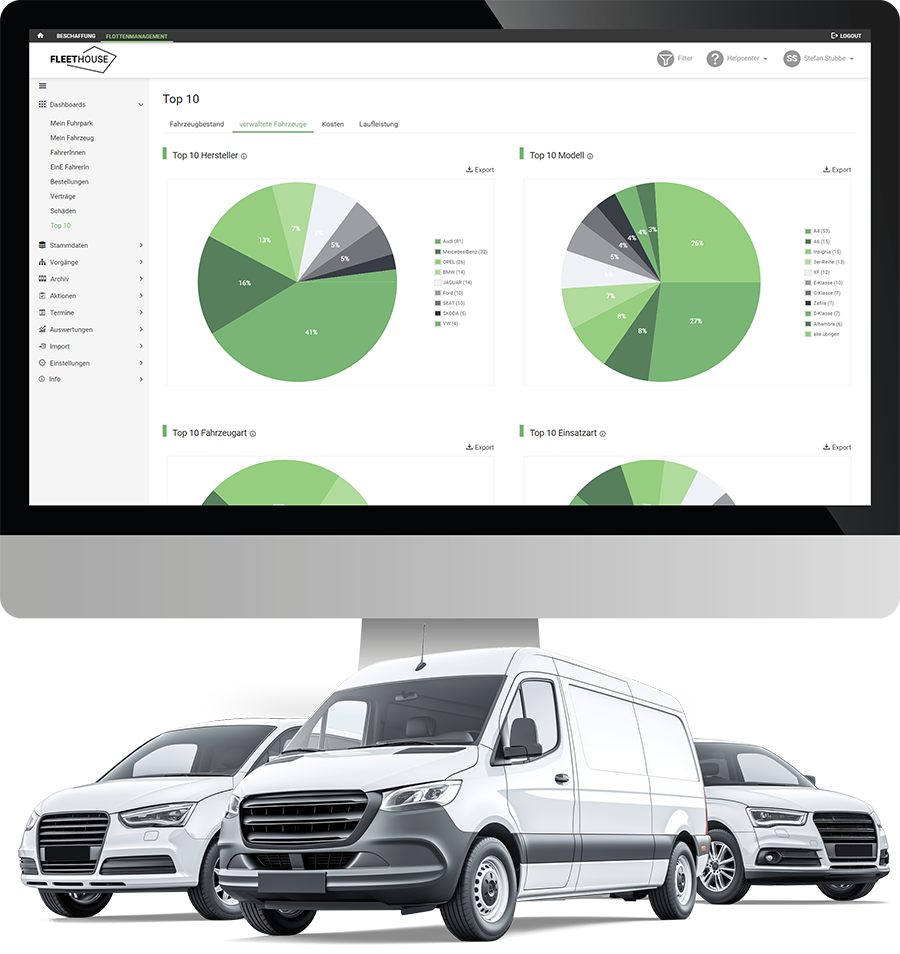
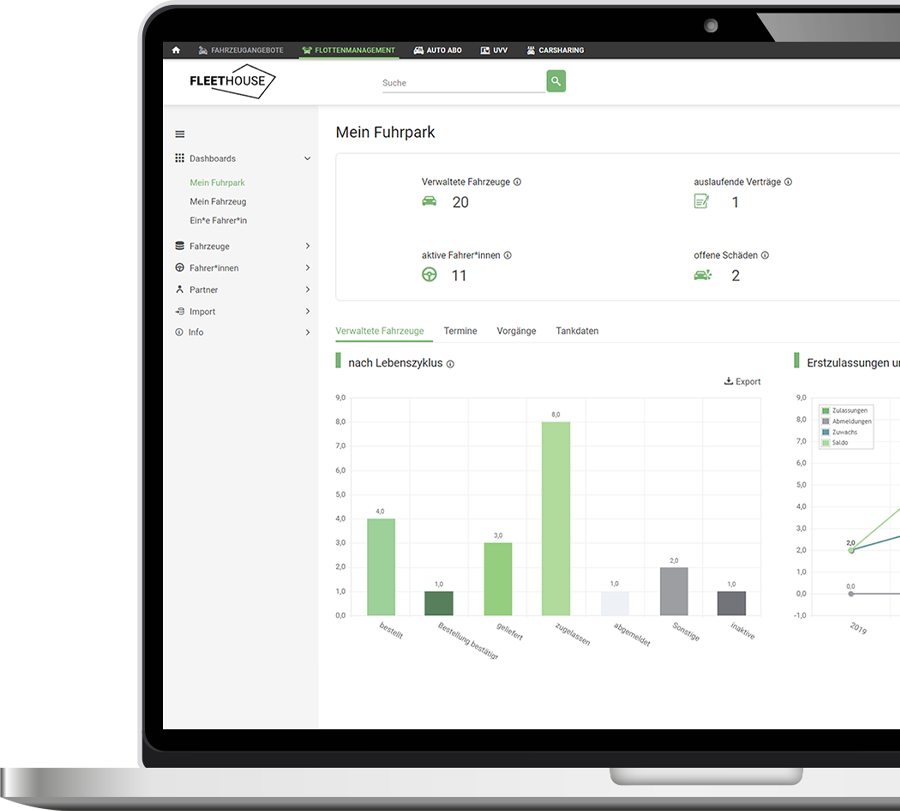
Our fleet software supports you in planning, managing and optimizing your e-fleet.
Success factors for long-term implementation in fleet management
A successful switch to an electric fleet starts with clear decisions: Which vehicles can be electrified? How many charging points are required? Which processes need to be adapted?
Close cooperation between fleet management, IT and infrastructure planning is important here. Only in this way can electrification be implemented holistically, from the integration of new vehicles and driver training to the ongoing monitoring of charging behavior, energy consumption and availability.
Digital tools help to create transparency and manage operations efficiently. With a strategic view of mobility, energy and processes, the long-term transition to an electric, economically viable fleet can be achieved.
Future-proof integration: How to successfully incorporate e-mobility into your fleet strategy
The long-term success of an electric fleet depends on its integration into the overall system. This includes :
Linking charging points, driving profiles and downtimes
Use of data for needs-based planning
Regular maintenance and inspection of the charging infrastructure
Supplemented by public charging stations and smart charging solutions
The selection of suitable electric vehicles, driver training and digital support through fleet management software solutions are also key components of a successful transition.
Those who focus not only on technology but also on processes, efficiency and user-friendliness will electrify their fleet in a sustainable, future-proof and operationally viable way.
Arrange an online consultation appointment
Arrange your personal consultation appointment now. You can easily select a suitable appointment using our booking tool.
The most important facts about electrifying your fleet
Electric fleets lower operating costs, reduce maintenance costs and benefit from tax incentives.
Electrification strengthens the sustainable image and makes companies attractive, future-oriented employers.
With the right charging infrastructure and digital fleet management, e-vehicles can be seamlessly integrated into day-to-day operations and used efficiently in the long term.
FAQ - Frequently asked questions about electrifying your vehicle fleet
An e-fleet is a vehicle fleet that consists entirely or partially of electric vehicles. It replaces conventional combustion engines with electric cars and is part of a sustainable and future-proof mobility strategy.
Planning begins with a needs analysis: which vehicles can be sensibly replaced? This is followed by the selection of suitable e-vehicles, the development of a suitable charging infrastructure and integration into existing processes.
Because electromobility pays off economically: lower operating costs, tax benefits and subsidies are all arguments in favor of the switch. It also gives companies a strategic advantage in terms of sustainability and climate protection.
As soon as the area of use matches the range and suitable charging options are available. The switch is particularly efficient in urban traffic, with clearly plannable routes and high capacity utilization.
Lower costs, a better carbon footprint, lower maintenance costs and tax relief. At the same time, an e-fleet strengthens the company’s image and provides more flexibility in future mobility planning.
Depending on the number of vehicles, AC and possibly DC charging stations, intelligent load management systems and sufficient charging points at relevant locations are required. Short charging times and reliable availability throughout the day are important.
Further Fleet Knowledge
If you liked this article and would like to know more about this topic, we recommend these articles.
studied business administration with a focus on human resources and organization in Berlin. He was then employed as a consultant and later as Head of Product Management at the management consultancy Hiepler und Partner GmbH. Through this work, he gained extensive expertise in the areas of fleet management, consulting and advisory services.