




Electric cars like the Tesla Model 3 or the BMW iX are becoming increasingly popular and are now appearing more and more frequently in corporate fleets. One way to test the use and suitability of electric vehicles in a fleet in advance is through a car subscription service. More and more fleets are embracing this concept, as it allows them to test new technologies with no obligation or to bridge the gap during delivery times for new cars.
In this article, we’ll explain the potential advantages and disadvantages of an electric vehicle subscription service for your fleet. We’ll also take a closer look at the various factors you should consider when deciding whether or not to opt for an electric vehicle subscription.
Contents
What is an e-car subscription?
An electric car subscription is a type of rental agreement for an electric vehicle that allows a company to use the car for a set period of time. Typically, the car (e.g., the Tesla Model Y) is provided by a car manufacturer, a car rental company, or a specialized car subscription provider, and the subscriber pays a monthly fee to use the car.
How does an e-car subscription work?
With an electric car subscription, there is no long-term contract, and the electric car can simply be returned or exchanged for another one at any time. The monthly payment typically covers all costs associated with the car, such as taxes, insurance, and maintenance. Electricity or charging costs are generally not included and must be paid by the subscriber. Some subscription contracts include a limited number of free kilometers per month, up to which no additional costs are incurred.
To sign up for an electric car subscription, the customer may be required to make a down payment and undergo a credit check. Once this process is complete, the vehicle can either be picked up at a pickup station or simply delivered right to the customer’s doorstep.
What are the advantages of an e-car subscription compared to buying or leasing?
A subscription service for electric cars is a good option for businesses that aren’t yet sure whether they want to permanently include electric cars in their fleet. This gives them the opportunity to try out electric cars with no strings attached, without having to worry about purchasing, financing, or maintenance. Afterward, you can decide whether purchasing electric vehicles permanently—as company cars or pool vehicles —is a sound investment.
Another advantage of an electric car subscription is that there is no long-term contract commitment, and—unlike with long-term leasing or financing agreements —the car can be returned at any time. This gives companies ample flexibility if their needs change on short notice. In addition, a car subscription saves time and effort, since the provider handles the vehicle’s insurance, maintenance, and repairs.
However, there are also drawbacks to electric car subscriptions to consider. If the car is used for an extended period, the subscription is usually more expensive than leasing a commercial vehicle. If you return the electric car early, you usually won’t be reimbursed for fees already paid. Therefore, it’s important to carefully weigh the pros and cons of electric car subscriptions and compare them with the terms for leasing or purchasing the vehicle.
What costs are included in the monthly fee for an e-car subscription?
The monthly payment for an electric car subscription includes almost all costs associated with the car.
The monthly payment typically covers:
- Use of the Car: You pay a monthly fee to the provider for the use of the car and may also make the vehicle available as a shared vehicle in the fleet during the term of the agreement.
- Agreed-upon mileage: As mentioned earlier, some providers offer a limited number of free kilometers per month.
- Taxes: Vehicle taxes and GEZ fees are usually included in the subscription as well.
- Insurance: Insurance for the electric car—such as auto liability insurance or partial and comprehensive coverage—is also included in the monthly payment. Since the exact scope of coverage may vary, you should review the terms of the contract in advance.
- Maintenance and Inspections: Regular car maintenance, such as tire changes and oil changes, is also covered by the monthly payment. In some subscription plans, replacement parts for the electric car are also included in the monthly payment.
- Service Hotline and Roadside Assistance: In addition to a support hotline that can help with questions or problems, many providers also offer roadside assistance and towing services to help you in the event of a breakdown or accident. Some providers also provide a replacement vehicle in the event of damage.
The following costs are generally not covered:
- Additional kilometers: If you drive the electric car beyond the number of kilometers specified in your subscription, you may incur additional monthly charges.
- Fuel and Charging Costs: Since electric cars are powered by electric motors, there are, of course, no fuel costs. However, there are costs associated with charging the battery when the car is charged at public charging stations. These costs are not included in the monthly payment to the provider.
- Car Care: The provider does not cover the costs of vehicle maintenance or windshield washer fluid.
- Damage: If the car is damaged, you may have to pay for repairs or replacement parts. In addition, you may have to pay the deductible under your comprehensive insurance policy.
Is there a minimum term or notice period for an e-car subscription?
The short minimum contract terms make subscription models particularly attractive for fleets that need to meet their mobility needs on short notice. For example, to bridge delivery times for new company vehicles or to accommodate temporary demand.
The minimum term and cancellation periods for an electric car subscription vary by provider. While some subscriptions start with a minimum term of three months, there are also more flexible subscriptions with terms as short as one month.
What requirements do I need to meet to take out an e-car subscription?
The exact requirements vary from provider to provider. In most cases, a credit check is conducted before a car subscription is finalized to assess the company’s creditworthiness.
Drivers must meet the following requirements, among others:
- be in possession of a valid identity document
be at least the minimum age, which is generally 18 years old
A maximum age can also be specified
- hold a driver’s license valid (in the EU) that does not expire during the subscription period
Digitize your Vehicle Fleet
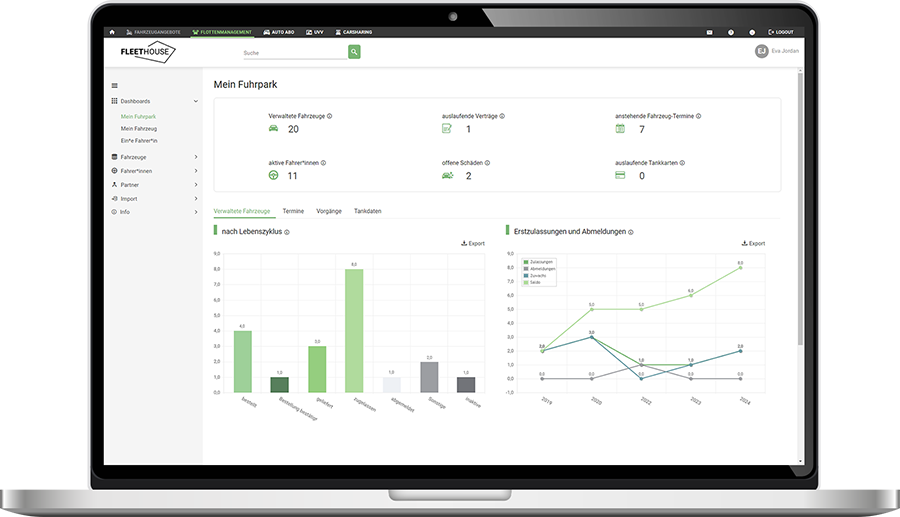
With Fleethouse, you can manage your electric vehicles digitally and make your day-to-day office work easier.
What are the operating costs for an e-vehicle as a company car?
In comparison, the operating costs for an electric car are lower than those for a car with an internal combustion engine. This is because there are no costs for gasoline or diesel when driving, and maintenance costs are lower. However, the purchase price or leasing costs for an electric car may be higher. It is therefore important to carefully weigh the monthly operating costs of an electric car against those of other fleet vehicles before making a purchase decision following the subscription period. The operating costs for an electric car used as a company car depend on various factors, such as:
- Car size and weight: The larger and heavier the car model, the more energy is required to accelerate and move it. This can affect operating costs.
- Car efficiency: The more efficient an electric car is, the less energy is needed to power it.
- Distance traveled: The longer the distance, the more energy the vehicle needs.
- Electricity Costs: Electricity costs can vary depending on the region and provider.
- Maintenance costs: Electric cars have fewer moving parts than internal combustion engines, which means they require less maintenance. However, electric cars also incur maintenance costs, such as for replacing tires and brake pads, which wear out more quickly.
Sicher unterwegs
Mit dem E-Learning Kurs für die flexible Fahrerunterweisung nach UVV werden Fahrer auch im Umgang mit E-Fahrzeugen geschult.
What needs to be considered with charging infrastructure and load management?
Overall, there are several factors to consider when introducing and using electric cars in a fleet. It is important to plan carefully and take all necessary precautions. This ensures that the use of electric cars in the fleet runs smoothly.
- Charging Infrastructure: To use electric cars in a business, a suitable charging infrastructure is required. This may mean that charging stations need to be installed at the workplace so that the vehicles can be charged during working hours. If electric company cars are to be used outside of work hours, access to public charging stations must be provided, or a charging station must be installed at the employee’s home. However, if an electric vehicle has been acquired through a subscription for only a few months, having your own charging station makes less sense. In this case, you can initially rely on public charging stations.
- Load Management: If a company plans to purchase multiple electric vehicles, it may also need to implement load management systems to ensure that the power supply is not overloaded and to prevent power outages.
- Planning and Coordination: To ensure that every electric car can be used effectively, good planning and coordination are essential. This includes planning drivers’ routes in advance and making sure the cars are charged in time so they are ready for the planned trips.
- Training: Employees must be trained on how to use electric cars safely and effectively, as well as how to charge and properly maintain the cars depending on the model.
Our conclusion
A car subscription is a simple and flexible alternative to buying or leasing an electric car. It offers the opportunity to test the use of electric cars in your fleet without having to worry about maintenance, insurance, or repairs. All associated costs are already included in the monthly payment.
When you subscribe to an electric car, you have the freedom to switch to a different vehicle at any time if you’re not happy with your choice. A Tesla Model 3 the first month, a BMW iX the next—the choice is yours.
Short contract terms (starting at one month) allow you to cancel the subscription at any time. However, there are also drawbacks to upgrading your fleet with electric cars through a car subscription service, which you should consider before choosing a car subscription over leasing.
The most important facts about the car subscription for e-vehicles at a glance
If you have a short-term need for electric cars or want to test their use in your fleet without obligation, the car subscription is a great option without making any costly commitments.
Costs for insurance, maintenance, repairs, breakdown service, normal signs of use and vehicle wear and tear are already included in the subscription rate.
Anyone considering adding electric cars to their fleet should address issues such as charging infrastructure, load management and planning and coordination of the electric fleet at an early stage.
Further Fleet Knowledge
If you liked this article and would like to know more about this topic, we recommend these articles.

Is a car subscription worthwhile for the fleet?